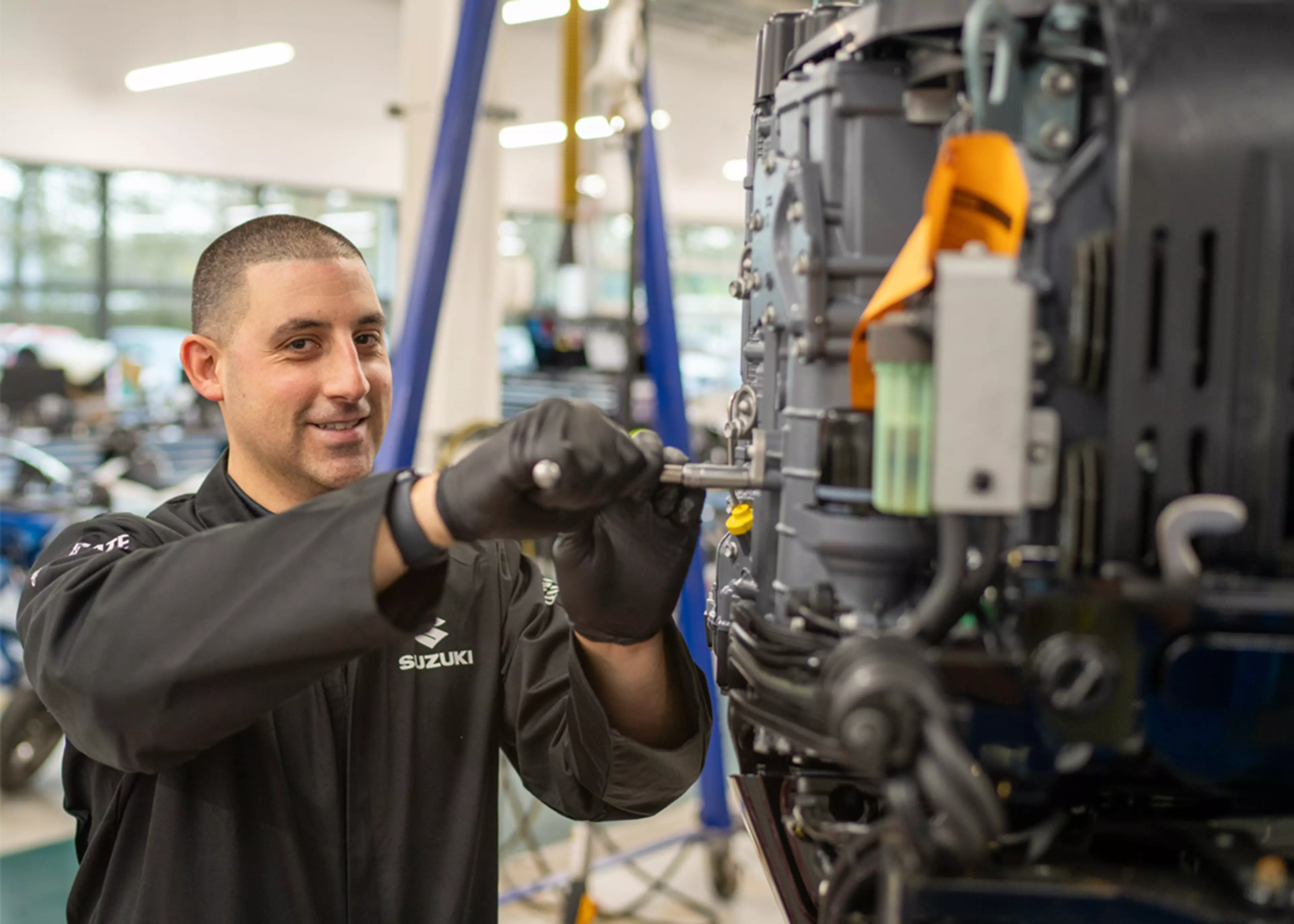


 Outboards
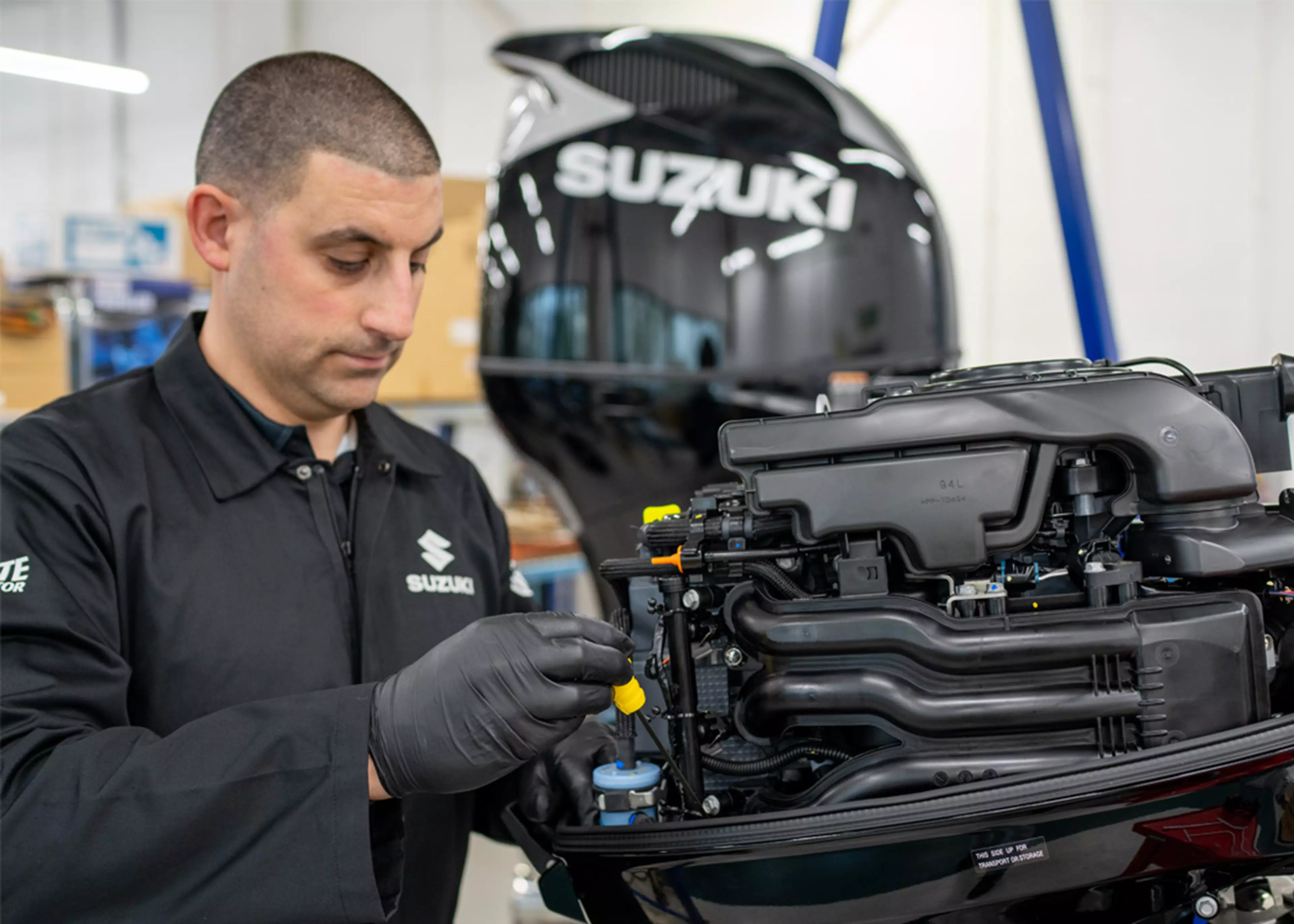
Suzuki Outboard Servicing & Maintenance
Carrying out regular maintenance and servicing on your Suzuki outboard is an important part of ownership.
Whether it's a DF2.5 on a dinghy or a DF350A on a RIB, regular attention towards your outboard’s parts, oils, and lubricants will help maintain its overall performance and is instrumental in ensuring that it remains safe to use.
In this article, we provide you with useful advice which, in combination with your owner’s manual, will keep your outboard operating as reliably as Suzuki expects.
You’ll learn about:
- Why you should perform maintenance checks and servicing regularly
- Checks and tasks to complete during every use of the outboard
- Periodic checks and tasks to complete
- Importance of annual servicing and winterisation, and how to complete these
Read on to learn more.
Why do you need to maintain your outboard?
Maintaining your outboard is important for several reasons.
Ultimately, regular maintenance ensures the engine and supporting parts continue to operate smoothly and reliably. Many issues related to the engine failing to start, rough running, and corrosion can be traced back to poor maintenance on an ongoing basis. In the long run, minor maintenance checks can help prevent large issues from developing that could greatly impact the reliability of your outboard and your safety.
Outboard motors operate in a harsh environment. The marine world and, more specifically, saltwater attacks boats and mechanical systems which are exposed to these elements during general operation. Salt build-up and residue can cause issues related to running and corrosion. It is therefore important that an outboard is kept clean, internally and externally, to help prolong the effective life of parts.
Checking over your outboard on a regular basis also helps to catch developing issues. This is especially important when an outboard has been used in prolonged operation or heavy seas, which may stress parts faster than expected. Your owner’s manual will provide guidance in the maintenance schedule on which parts of your outboard to monitor more frequently.
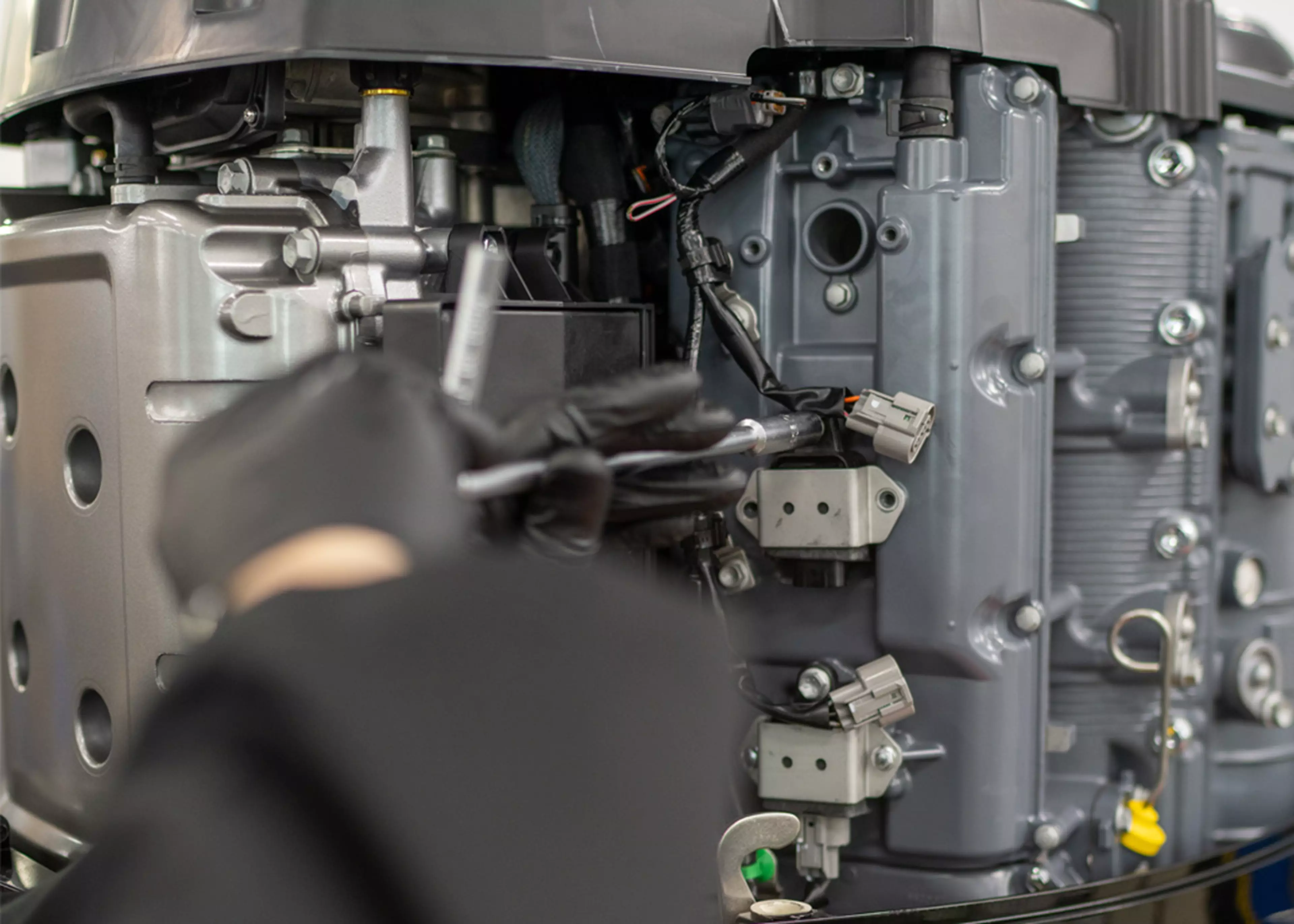
What basic outboard maintenance can you do?
There are many basic tasks you can complete to maintain your outboard.
- Refer to your owner’s manual regularly
Your owner’s manual contains important information regarding the use of your outboard and its service schedule. This should be referred to consistently to ensure you inspect, clean, tighten or replace parts of the outboard at the correct time. The owner’s manual also has useful information for troubleshooting issues with your outboard and tips for best practices. - Flush the engine with freshwater after each use
After using an outboard in muddy, brackish or salt water, the engine should be flushed with clean, fresh water. Engines can corrode from salt, and their lifespan may be reduced.
Suzuki outboards can be flushed in a variety of ways. Refer to your owner’s manual to ensure the recommended method is used. - Check the condition of your kill cord
Kill cords are vital safety equipment for you and your boat. Through consistent stretching, contact with abrasive surfaces and saltwater, they can wear, causing them to be ineffective. In an emergency, this may fail to shut off the outboard. A quick look at the kill cord each time you use your boat will help you understand if it should be replaced. - Check the oil level
The choice and maintenance of engine oil are major factors in affecting the engine’s performance and life. Besides only using premium-quality four-stroke marine engine oil, the oil level in your outboard should be monitored during operation, and checked more frequently during use for prolonged periods or in heavy seas.
Checking the oil level can be completed via an oil level inspection window or dipstick dependant on the model. Refer to your owner’s manual for instructions on checking and, if necessary, filling the engine oil in your outboard. - Check the propeller
Propellers can be vulnerable to hitting objects in the water or damage due to cavitation or high-speed operation. Regularly checking your propeller will help to catch damage and erosion and ensure the outboard continues to operate smoothly. Only check the propeller when the engine is off. - Inspect Anodes
Your outboard’s exterior is protected against corrosion by anodes. These sacrificial parts control electrolysis and will corrode in place of the surfaces they are protecting. Periodically checking anodes have not become detached and cleaning them with a wire brush to remove any coating that may decrease their protective ability will help maintain their effectiveness.
Anodes can also be found internally attached to the cylinder block/head. Consult an Authorised Suzuki Dealer to inspect and replace these anodes if needed.
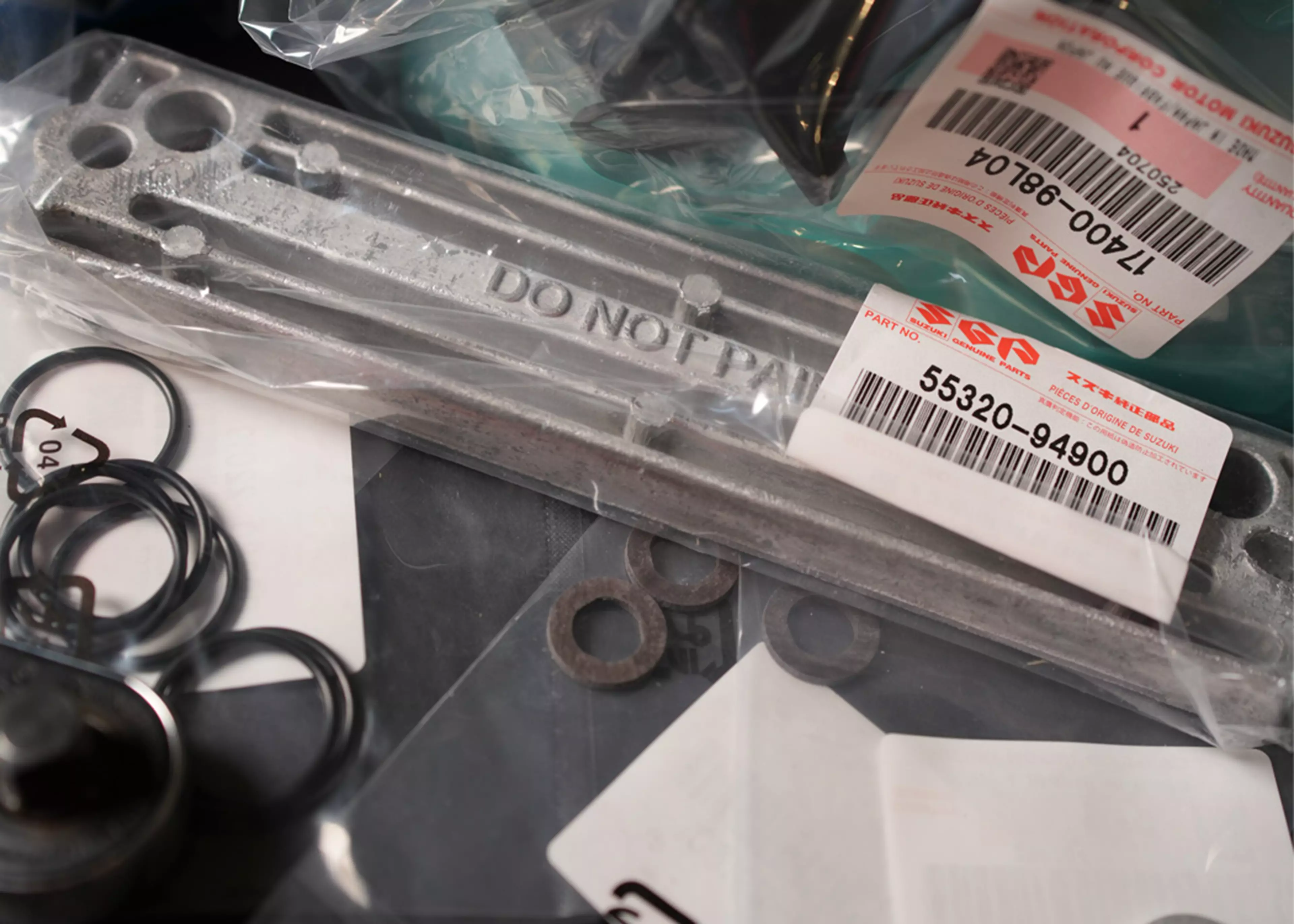
How can you complete an annual service on or winterise a Suzuki outboard?
Suzuki always recommends taking your outboard to an Authorised Suzuki Dealer once a year, or after reaching the specified number of running hours in your owner’s manual, for an annual service.
Authorised Suzuki Dealers are fully conversant with the Suzuki Diagnosis System and have received training by Suzuki in the service and maintenance of a Suzuki outboard. By only using Suzuki Genuine Parts, recommended oils and lubricants, an Authorised Dealer makes sure your outboard will always be ready for the season ahead.
If you plan on not using your outboard during winter or for prolonged periods, we recommend you ask your local dealer to winterise your outboard. Winterising is important to help protect the internal components against cold and freezing weather and degraded fuel. Damage may occur if an outboard is unprepared for long inactivity, which may not be immediately apparent until it is next used.
Suzuki outboards are exceptionally reliable when maintained and serviced correctly, and annual servicing and winterisation by our Authorised Suzuki Dealers helps to protect your investment and ensures your outboard performs at its best.
Find your nearest dealer via the Suzuki Marine website: marine.suzuki.co.uk/find-a-dealer.
Summary
Carrying out basic maintenance and regular servicing on your outboard motor helps to protect its parts, operating efficiency and value. Suzuki outboards are incredibly reliable if maintained correctly and according to your owner’s manual, and, with the right care, deliver many happy hours of boating every year.
Annual servicing is important to check and replace various parts of the outboard, change oils and reapply lubricants, as well as catch any developing issues, to ensure the best performance from the engine. Suzuki always recommends taking your outboard to an Authorised Suzuki Dealer once a year for its annual service, or to winterise it during periods of inactivity over the winter months.
Referring to your owner’s manual regularly helps you to remain aware of the outboard’s maintenance schedule and best practices for its operation.
More information about parts and servicing can be found on Suzuki Marine’s website, marine.suzuki.co.uk/owners/.